Sunday, April 28, 2013

MS Walk for the third time

The beginning was quite strange. Two years ago, browsing through various blogs I noticed one, written by Anna, young Polish girl  fighting with Multiple Sclerosis...


The girl was young and slender, but she fought like a war-hardened warrior (and the fight continues).
Until then, I imagined Multiple Sclerosis is some kind of sclerosis. And sclerosis is some old-age ailment - memory loss, fragility of blood vessels, brain stroke, etc. So great was my shock to learn, that it attacks mostly young people, mostly young women, just like one I mentioned at the beginning.
This knowledge brought another sad reflection on poor condition of human existence and my inability to solve all problems of this world.

It would have stayed like this forever if not..  few days later, on the announcements board in my library, I noticed a leaflet about MS Walk. It could not have been a pure coincidence. It was time to ACT!
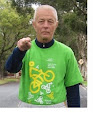
I looked at MS Walk web page and registered for the event. My stories about it are here and here. My walk, below...


Last year I was looking forward for this event, my account of it is here and here. I collected over $700 for this honorable cause. Thank you my sponsors from around the world. My last steps looked like this...
This year I will match every dollar donated to my appeal with 1 złoty of my personal donation to Anna, who has to fight not only with the cruel disease, but also with very serious limitation of Polish health system.

Friday, April 19, 2013

A soldier who did not exist

ANZAC Day is coming closer. In supermarkets one can meet the forerunners - old gentlemen ih a poppy in a buttonhole and and tray with memorial badges. Such as this one..


- Are you a war veteran? - I asked politely. The gentlemen nodded with a smile.
- From which war? - I tried to judge his age - maybe Korean?
- No, from the big one, the Second World War?
- The Second World War? Wow!
- You do not believe me? Here is my photo - he pulled out a yellowing book and showed a photo of young man in a slouch hat.
- Where did you fight? Africa, Europe?
- No, closer to home - Papua New Gwinea, East Timor.
- Kokoda Trail?
- No. I served in a special unit, something like today's SAS. We were dropped behind enemy lines and our task was to kill Japanese commanders.
- You lived in a jungle and hunted enemy commanders?
- Yes, full 6 years.
- Unbelievable. I suppose you wrote a book about it.
- No. We made oath not to disclose any details for the rest of our lives.
- But after some 50 years all records are usually disclosed..
- There are no records. All was destroyed after the war. At the very beginning we were told, that there will be no promotions and we will not receive any war medals. In fact we were told, that we are not expected to survive.
- But you survived.
- I am the only one. Wal, I mean Wally, Wallace is my name. - we exchanged a handshake.
- Certainly you will be in the parade on Thursday.
- No. I have nobody to walk with.
Questions, questions crossed my mind. I stepped back and tried to gather my thoughts. When I looked back Wally disappeared. Was it real? Was I day dreaming? I reached into my pocket and found a badge with the slouch hat. So he was here.

Sunday, January 27, 2013

On leave from hospital.

Some time ago, last year, I made a guided tour of Melbourne Cemetery. Our guide, brought to our attention few rotundas.
Hundred years ago they were places for parties. At that time, the cemetery was a quite popular place. On weekends it could be visited by as many as 5,000 people. Bands played popular music, people brought food and drinks. Picnic close to deceased family members.
- People were not afraid of death because people were dying at home - said our guide. At these times each grown up person witnessed at least few deaths.. and births. Deaths and births happened at home, were part of LIFE. Now death and birth occurs in hospital. Death became a disease. So people are afraid of it.

Thursday, January 3, 2013

van Meegeren

 Very important heritage of Netherlands are paintings of Dutch masters.
Harmenszoon Rembrandt, Frans Hals, Hieronymus Bosch, Johannes Vermeer, Vincent van Gogh tjust o mention most popular.
During the Second World War Germany occupied Netherlands and many treasures of art had been stolen from Dutch art galleries and museums.
No wonder that after the end of war in May 1945, Dutch government created a special commission to recover stolen treasures.
Few months later the Commission was electrified by a news that in mountain tunnel in Austria a train was discovered containing hundreds of paintings being evacuated from collection of Herman Goering, one of 3 most powerful men in Nazi Germany.

Representatives of the Commission hurried to Austria. The train was opened and the very first piece of art was an unknown painting from XVII century.
The art experts had no doubts - Vermeer...

CLICK

Christ with a Woman taken in Adultery.

It was painted in similar style to another Vermeer painting, The Supper in Emmaus...

CLICK

 Which was acquired by the state museum - Rijksmuseum - some 10 years earlier.

It was quite a laborous process to entangle a network of art dealers who supplied H. Goering with Dutch masterpieces, but eventually the track led to Haan van Meegeren, an mediocre Dutch artist who lived in relative obscurity.

Han van Meegeren was arrested. He denied any connection to a stolen masterpiece. but prosecution was merciless - either you disclose a source of this painting or - death sentence.
Van Meegeren tried few tricks, e.g that he was commissioned to sell this painting by an Italian aristocrat whose identity cannot be disclosed, but prosecution was merciless - total disclosure or death sentence.

Eventually van Meegeren gave up - I painted it myself!
The High Commission considered it such a good joke that they accepted van Meegeren offer - give me 2 weeks time and painting utensils and I will produce another "Vermeer" of comparable quality.

And he did...  CLICK

New painting was also on Biblical theme - Jesus among the Doctors - 12 years old Jesus visited a temple with his parents and astonished everybody as he lectured the crowd about holy Scriptures.
The experts agreed - the new work qualifies to be recognised as Vermeer's painting.
During the painting trial van Meegeren revealed his secret - how to make the fresh paint to imitate a 400 years old one. He mixed the paint with bakelite (it was the first synthetic plastic, produced in 1907). The finished painting was put in a high temperature which caused the paint to crack in a old-fashioned way.

About this time another discovery was made.
Van Meegeren put such a prize on his fraud sold to Goering, that the buyer agents ran short of money so they gave back to original owners over 100 previously stolen paintings.

Overnight Han van Meegeren became almost a national hero - not only he mercilessly cheated the top Nazi criminal but also saved paintings of less known masters.

To be completed...

Tuesday, October 30, 2012

and the Impossible Orchestra played on and on..

Last Sunday I was waken up  before 4 am. When did I get up so early last time? Probably in June, when our grandson was sick and two his siblings spent night under our care. It was quite natural - a child cried.
This time the alarm was painful. Very quickly we were ready. Travel to the city centre lasted only 16 minutes. 16 minutes at 4 am.  At that time someone was called by a crying child... someone had to get up to help someone... and the Impossible Orchestra played already 11 hours.
Finally we reached Melbourne Concert Hall..


We were warmly welcomed by the staff.

Bang


This was IT - The Impossible Orchestra - 24 hours musical marathon organised by CareAware.


We proceeded to the auditorium. Orchestra played interval music - Mozart's divertimento.


The clock showed running time, next session will start in 54 seconds...

Odliczanie czasu

It started with an overture to Ruslan and Ludmiła. There were some thirty people in the auditorium and full scale symphonic orchestra on the stage. My idea to listen to Impossible Orchestra at Impossible Time was fully justified. Brett Kelly - the conductor - welcomed us and invited to come closer. Closer to the stage, closer to each other. That was a good move, caring move.

In an interview on ABC Classic Brett Kelly promised energetic music and there it was - Tchaikovsky, Johann Strauss, even John Sousa. Why not?

Young man sitting nearby admitted this was his first ever encounter with symphonic orchestra. How familiar.. One of the first pieces of live music I heard some 60 years ago was Franz von Suppe's Light Cavalry Overture. And here it was - breaking time and age barriers.
There were some gentle and slow pieces of music, such as Asa Song by Edward Grieg used as a background for a story of Aboriginal father about his love to his daughter suffering Down syndrome.  Music from cold Norwegian fjords brought to the Australian bush. Connecting hands and hearts of performers and public, young and old.  We were connected to outside world by twitter messages.

The concert ended with music from Bizet's Carmen - Torreador Song - the piece, which switched on my interest with classical music. Start and end - connected.

We left the Concert Hall at 8 am. Swanston St. was still asleep, as was Yarra . We called for a breakfast to nearby Hilton Hotel. Only there I felt excitement leaving my body and soul. I felt tired and sad. We drove home in silence. Someone was taking kids for a walk... someone was helping his disabled mother in morning toilet... someone looked with love in absent eyes of his or her life partner... someone extended strong hand to trembling hand of his or her parent. And the Impossible Orchestra played on and on...
 

Click above to see more photos.

Monday, September 17, 2012

Gusto - some taste, no substance.

In the first days of September I visited the State Library to see a very tasty exhibition - Gusto - a culinary history of Victoria. First impression was very encouraging...

Inside... I know, that my expectations were very high, but why should I lower the bar?
Here is a summary of what I expected and what I found.

1st chapter of the exhibition was titled - Indigenous foods. Sounds exciting - doesn't it?
I read many stories how nutritious bush tucker can be, how white explorers died of thirst and hunger in environment where Aborigines lived quite comfortably. And I always wondered - why there is not a single restaurant serving Indigenous food? Why? (If someone knows one - please leave me note).
The only feasible explanation so far, I found in a movie - Crocodile Dundee - "you can survive on it, but it tastes like shit".
And what was the answer at the Gusto exhibition? An archeological map of some river with marked places where Aborigines fished for eels. Explanation how eels were trapped supported by 1 photo. End of the story. Not much as for some 20,000 years of history and hundreds of thousands of people. They even did not bother to mention the Bogong Moth :(

Chapter 2 - Sources of food. It started promisingly - list of goods brought to Portland by the first settlers in Victoria - Henty Family. Unfortunately the list is quite faded, I managed to decipher only one position - a box of 50 knives. It wouldn't be too much effort to place alongside a readable copy.
Anyway - 50 knives sharpened my appetite - to what extent these people depended on importing food from Tasmania? When they became self sufficient? Whether they hunted local animals or ate whatever bred on their pastures? When they produced first crop?  Is there actually any food harvested in Victoria at all? Question marks - question marks - question marks. The only answer was a big.. big.. bull....


Next chapter - alcohol - mostly copies of warning posters and prohibition campaigns.

Next chapter - II World War times - rationing. There is a  page from food rations book - how interesting. But which food produce were actually rationed? What was food quota for say - 4 people family? Was there a black market for rationed food? Was non-rationed food easily available? There is a poster about cooking classes - how to manage on ratio cards alone. Great! But we have no chance to learn the answer.

Final stage of exhibition is a random list of restaurants, which were and some of them still are landmarks of Victorian culinary scene. Memories and sentiments soften my heart, but the brain still asks: what was the origin of China Town in Little Collins St? Why Lygon St is what it is?

The best part of exhibition is probably in the bookshop. Great choice of cookbooks written by Victorian chefs. My recommendation below...

Sunday, June 10, 2012

On the trails of Lady Melba

Nellie Melba (Helen Mitchell) was the first Australian known to me. All thanks to Melba ice cream cream, which I tasted many, many years ago in Poland. No wonder I was keen to see some memories of her in her native city - Melbourne.
Some things are obvious - Melba Highway so noticeable if someone drives to Healesville, Melba Hall at the Melbourne University, statue of the singer at waterfront. Then I tried to find places related to her life and death. The first was Coombe Farm, which unfortunately is not accessible to visitors, but it was at least partially compensated by visit to the winery belonging to it. There we found the plate, on which Melba dessert was served for the first time..


There was also a portrait of the singer...


.. and a selection of good wines. The other place was Lilydale Cemetery. It was not so easy to find grave of  the famous Melbournian, but finally we found it..


In the evening, over a glass of freshly purchased wine, we listened to some opera arias, which Nellie Melba sang long ago and for this while, the time ceased to exist.